
Digital Product Passports and Transparency in the Sustainable Textile Industry
The textile and fashion industry is currently undergoing significant changes related to sustainability, circular economy principles, and digitalization. One of the most important
initiatives introduced by the European Union is the implementation of Digital Product Passports (DPP) for textile products.
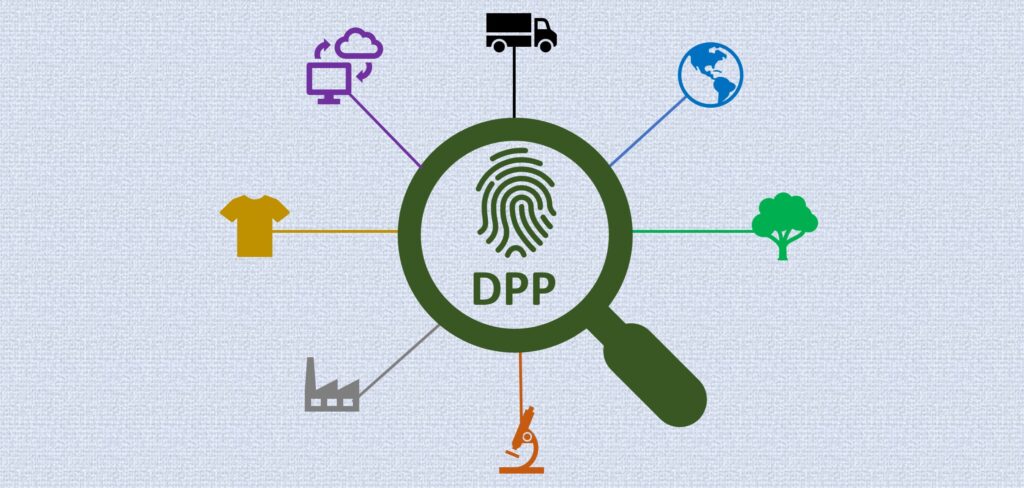
A Digital Product Passport represents a digital identity of a product, accessible through a QR code or digital label. It contains information about:
• material composition,
• product origin,
• production conditions,
• repair possibilities,
• recycling options,
• and the environmental impact of the product.
This initiative is part of the European strategy for sustainable and circular textiles and aims to increase transparency in the textile industry, reduce textile waste, and encourage more
responsible production and consumption practices.
Digital Product Passports enable better product traceability and help consumers make more informed and sustainable decisions. At the same time, they represent an important tool in
combating “greenwashing” — the misleading presentation of products as environmentally friendly.
The implementation of these systems is closely connected with new technologies such as:
• blockchain,
• artificial intelligence,
• digital databases,
• and smart labels.
In addition to the industry, these changes also influence fashion education, where digital skills, circular design, and sustainable practices are becoming increasingly important.
Digital Product Passports represent an important step toward a more sustainable, transparent, and circular textile industry in Europe.
Additional Sources:
