
Digital Product Passport Registry Goes Live: A Major Step Towards DPP Implementation
On 20 July 2026, the European Commission launched the Digital Product Passport (DPP) Registry, together with a dedicated testing environment. The launch represents an important milestone towards the practical implementation of Digital Product Passports for products placed on the European market.
The Digital Product Passport, established under the Ecodesign for Sustainable Products Regulation (ESPR) (EU) 2024/1781, is a digital set of information associated with an individual product. It is designed to enhance transparency across supply chains, support more informed consumer choices, facilitate product management throughout the lifecycle in line with the principles of the circular economy, and improve transparency regarding compliance with EU legislation.
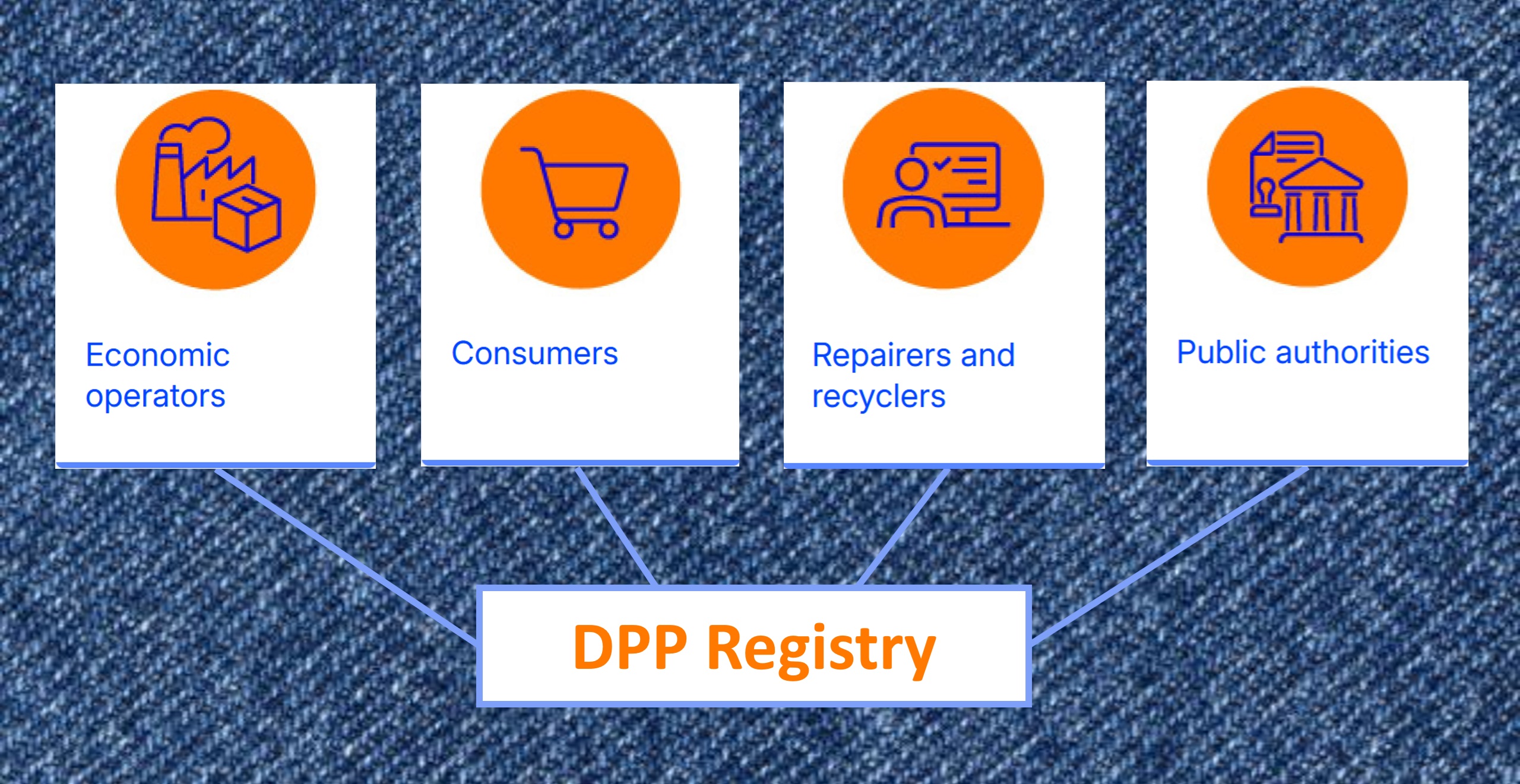
The DPP Registry will provide the secure infrastructure for registering unique product identifiers and their associated metadata. However, detailed product information will be stored in decentralized databases selected and managed by economic operators.
Economic operators placing products on the EU market will be required to register the relevant DPP in accordance with the applicable product-specific requirements. Depending on the type and characteristics of the product, a DPP may identify a product at the model, batch, or individual item level.
The launch of the Registry follows the adoption of Commission Implementing Regulation (EU) 2026/1778 on 16 July 2026, which lays down the implementing arrangements for the operation of the Digital Product Passport Registry. At present, the Implementing Regulation does not establish specific DPP requirements for textiles and apparel. Nevertheless, it provides the framework for the registration of future textile DPPs. Commission Implementing Regulation (EU) 2026/1778 establishes Clear implementation rules for:
- access management and user authentication;
- requirements for the registration and storage of the necessary data; and
- the technical architecture of the DPP Registry.
Registration is available through both a secure user interface and an Application Programming Interface (API). This enables economic operators, where appropriate, to integrate DPP registration into their existing digital systems. Economic operators may also request proof of registration in the form of a secure electronic document. Such proof can be used to demonstrate compliance to third parties, particularly in business-to-business (B2B) transactions. The Implementing Regulation also clarifies the respective responsibilities of the European Commission and EU Member States, contributing to legal certainty, predictability and trust in the operation of the DPP system.
Responding to feedback from stakeholders and Member States, the DPP Registry has been designed with a particular focus on usability, interoperability and data security. Businesses will have access to a free semantic repository providing machine-readable data models, definitions and vocabulary across product groups through documented APIs. This infrastructure will support interoperability and facilitate transparent data management. The Registry also incorporates a verification and logging system, strengthening security, accountability and reliable access management.
The phased implementation of Digital Product Passport (DPP) requirements across different sectors helps reduce the administrative burden and allows for gradual adaptation in areas requiring complex semantic models, such as the textile and clothing industry.
The Digital Product Passport is a key instrument for advancing the circular economy. By making relevant product information more accessible, it can support more informed consumer choices, increase transparency regarding product materials and characteristics, and facilitate product maintenance, reuse, repair and end-of-life management.
For the textile and apparel sector, the adoption of the ESPR Delegated Act on DPP is currently planned for Q4 2027. Following its adoption, additional guidance, technical specifications and implementation measures will be developed to support the introduction of textile-specific DPP requirements. Given the expected transition period of at least 18 months, the mandatory registration of DPPs for textile products is therefore not expected to become applicable before mid-2029.
Learn more:
What is a Digital Product Passport (DPP)?
Textile Apparel and the Digital Product Passport (DPP)
