
Circular Economy Approaches in Home Textile Production: Sustainability Assessment of Recycled PET Fibres through LCA and LCC
This study investigates the environmental and economic sustainability of home textile production using recycled polyethylene terephthalate (r-PET) fibres derived from post-consumer plastic bottles. The research applies Life Cycle Assessment (LCA) and Life Cycle Costing (LCC) methodologies to evaluate the impacts associated with the production of one ton of home textile products within the textile industry of Pakistan.
Using a cradle-to-gate approach and the ReCiPe 2016 midpoint methodology through SimaPro v9.6 software, the study assesses eighteen environmental impact categories related to the collection, processing, extrusion, and textile manufacturing stages of recycled PET fibres. The findings demonstrate that the integration of r-PET fibres significantly reduces the overall environmental footprint compared to conventional virgin polyester and cotton-based alternatives, particularly in terms of greenhouse gas emissions, fossil resource consumption, and water use.
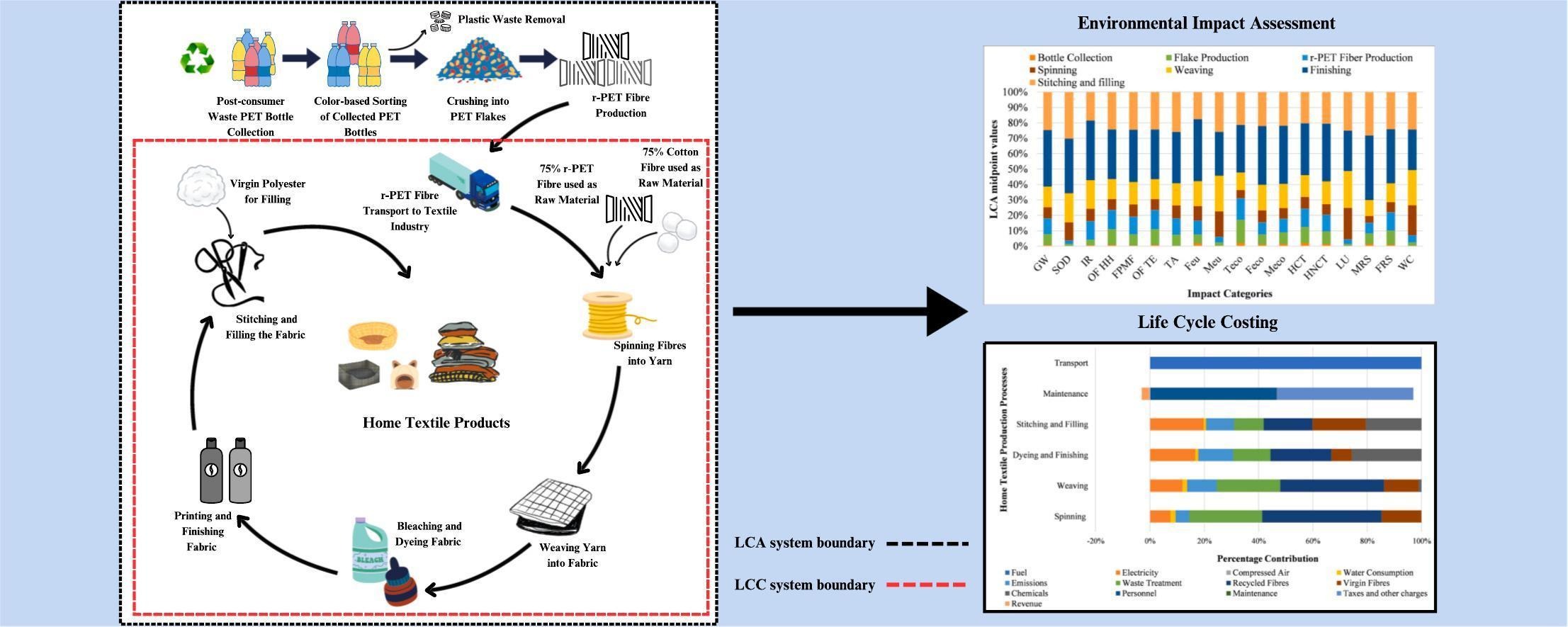
The analysis identifies chemical consumption and electricity generated from heavy fuel oil (HFO) as the primary contributors to environmental and economic burdens. Human carcinogenic toxicity emerged as the highest environmental impact category, while dyeing and finishing processes represented the largest share of production costs. Scenario analysis further revealed that substituting conventional electricity sources with solar energy could reduce global warming impacts by up to 6 %, whereas blended textile compositions combining r-PET and virgin cotton fibres contribute to additional resource efficiency improvements.
The study highlights the strategic role of recycled textile materials and renewable energy integration in advancing circular economy practices within the textile sector. The findings align closely with the objectives of the Interreg Euro-MED VerdeinMED programme by supporting sustainable resource management, waste valorisation, industrial decarbonisation, and environmentally responsible production systems across Mediterranean and neighbouring regions.
Overall, the research provides valuable insights for policymakers, textile manufacturers, and sustainability stakeholders seeking to promote green transition pathways and strengthen the adoption of circular and low-carbon solutions in the home textile industry.
Full article: Sustainability assessment of home textiles made of recycled PET fibre using life cycle assessment and life cycle costing analyses
https://www.sciencedirect.com/science/article/abs/pii/S0048969725012938
