
How the European Union Is Changing Fashion: New Legislation for Sustainable Consumption and the Circular Economy
Fast Fashion and the European Union’s Green Transition
Fashion is no longer only a matter of style — it is also a matter of responsibility. Fast fashion, with its constant production of cheap clothing and its equally rapid disposal, has led to an environmental crisis that requires immediate action.
Shocking figures:
- 19 kilograms of textiles are consumed per person in the EU (2022)
- 12 kilograms of clothing are discarded every year
- 2,700 litres of water are required to produce one cotton T-shirt
- 355 kg of CO₂ emissions per person are generated from clothing purchases
- Only 1% of used clothing is recycled into new garments
The Environmental Impact of Fast Fashion
Clothing production requires enormous amounts of water, land, and raw materials. Washing synthetic fabrics releases millions of microplastic fibres into the oceans, while the majority of unsold or used clothing ends up in landfills or is incinerated.
The EU’s Response: Legislation for Sustainable Fashion
The European Union has introduced a series of legislative measures aimed at reducing the impact of fast fashion:
New Strategy (2022)
- Promotion of durable and repairable products
- Strengthening of the circular economy
Mandatory Textile Collection (2025)
Producers will be required to cover the costs of textile collection and recycling
Ecodesign Regulation (2024)
Minimum standards for durability, reparability, and energy efficiency
Ban on the Destruction of Unsold Goods (2026)
Companies will be required to report what they discard and why
Combating Greenwashing
Stricter criteria for environmental product claims and eco-labeling
The Role of Consumers
Change does not come only through legislation. As consumers, we can also:
- Choose high-quality and durable clothing
- Avoid impulsive purchases
- Support sustainable practices such as clothing rental and second-hand shopping
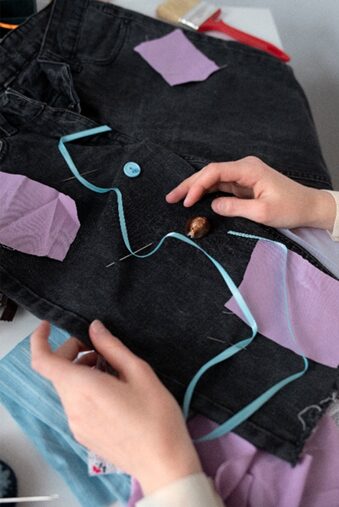
Picture: Upcycling and reuse of clothing materials. Designed by Freepik, www.freepik.com.
Conclusion
Sustainable fashion is not simply a trend — it is a necessity. The European Union is leading the way, but real change requires the participation of all of us. Let us make fashion not only beautiful, but also responsible.
Source: https://www.europarl.europa.eu/topics/en/article/20201208STO93327/fast-fashion-eu-laws-for-sustainable-textile-consumption
