
Why is Textile Recycling So Difficult?
The European Union has placed significant emphasis on transitioning towards a circular economy, particularly within the textile sector. However, despite these efforts, the vast majority of discarded textiles are not being recycled. The challenges preventing large-scale textile recycling are both technical and systemic, ranging from insufficient collection infrastructure to the complexity of textile materials.
This article examines the key barriers that hinder textile recycling, highlighting why the industry still struggles to integrate recovered fibers into mainstream production despite ambitious policy targets.
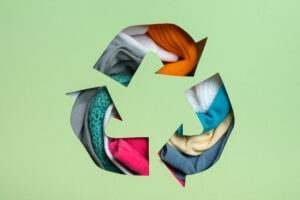
Collection Challenges: Why Most Textiles Are Not Recovered
A fundamental prerequisite for textile recycling is the efficient collection and sorting of post-consumer garments and fabrics. However, the current system is highly fragmented, making it difficult to capture a sufficient volume of textiles for processing.
- Lack of Dedicated Collection Infrastructure – Unlike materials such as glass or paper, textiles are not widely collected separately, meaning that most discarded clothing ends up in general waste streams. Many regions still lack accessible drop-off points or dedicated collection systems.
- Limited Consumer Awareness – Even where collection points do exist, public awareness remains low. Many consumers are unaware of how to properly dispose of textiles, leading to high rates of landfill disposal.
- Dependence on Export Markets – A significant proportion of used clothing collected in Europe is exported to non-EU countries, often to destinations where recycling infrastructure is underdeveloped and regulatory oversight is minimal.
Without an expanded and well-organized collection system, textiles cannot be effectively sorted and processed, severely limiting the potential for recycling.
The Complexity of Textile Materials: A Technical Obstacle
Even when textiles are collected, recycling them remains an intricate process due to the nature of modern fabrics. Unlike materials such as aluminum or glass, which can be infinitely recycled with minimal degradation, textiles present unique challenges:
- Blended Fabrics – Many garments are manufactured using fiber blends, such as polyester-cotton combinations, which are difficult to separate for recycling. These blends require specialized chemical or mechanical processes to extract usable fibers.
- Low Durability of Recycled Fibers – Unlike virgin materials, recycled fibers tend to degrade more quickly, making them less attractive to manufacturers who prioritize durability and quality.
- Manual Sorting Constraints – The lack of automated textile sorting technology means that most textile waste still needs to be sorted by hand, a time-consuming and expensive process that slows down recycling efforts.
These technical barriers increase processing costs and reduce the competitiveness of recycled textiles compared to virgin materials.
Economic and Policy Barriers: Why Recycling Remains Costly
Beyond technical issues, the economic landscape surrounding textile recycling remains a major obstacle.
- High Processing Costs – Advanced textile recycling technologies, such as chemical fiber regeneration, require significant investment in research and infrastructure. As a result, the cost of recycling textiles often exceeds the cost of producing virgin fibers.
- Lack of Financial Incentives – The textile industry does not receive the same level of subsidies as other sectors, making it financially more viable to produce new textiles rather than recycle existing ones. Many government incentives still favor virgin fiber production, further widening the cost gap.
- Regulatory Gaps – While the EU has introduced policies to promote textile circularity, inconsistencies in national regulations create obstacles. Some countries lack clear waste management policies, while others struggle with enforcement, leading to inefficiencies in textile waste processing.
For textile recycling to become economically viable, policy intervention is required to level the playing field between virgin and recycled materials.
While the transition to a circular textile economy is a clear EU priority, the reality is that major systemic barriers still prevent large-scale recycling. Addressing these challenges requires:
- Improving textile collection systems – Increasing access to separate collection points and raising public awareness.
- Investing in advanced recycling technologies – Supporting innovation to process fiber blends and low-quality textiles more efficiently.
- Creating financial incentives for recycled materials – Implementing tax benefits, subsidies, or mandatory recycled content quotas to make recycling a cost-effective option for brands.
Without urgent action, textile waste generation will continue to rise, and the industry will struggle to meet the EU’s 2025 separate textile waste collection mandate. Only through a coordinated approach can Europe achieve a true circular economy in textiles.
Sofia Plakantonaki / VERDEinMED
