
Extended Producer Responsibility (EPR) in Textile Waste Management
Extended Producer Responsibility (EPR) is a key policy instrument under the EU Waste Framework Directive (WFD) (Directive 2008/98/EC). It requires producers to take responsibility for the entire lifecycle of their textile products, from design to post-consumer waste management.
The July 2023 revision of the WFD introduces a mandatory EPR scheme for textiles, requiring all EU Member States to enforce producer responsibility obligations. This post explores the current state of EPR implementation across Europe, highlighting the progress, challenges, and key national strategies.
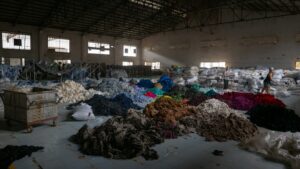
Photo by Francois Le Nguyen on Unsplash
What is EPR for Textiles?
- Shifts responsibility from consumers to producers
- Encourages eco-design and recyclability
- Funds collection, sorting, and recycling initiatives
Under the EU Waste Framework Directive (WFD), Member States are required to introduce EPR schemes for textiles by 2025.
Examples of EPR Implementation Across Europe
In North Macedonia, a mandatory EPR regulation for textiles was enforced on January 1, 2024, requiring producers to finance the collection and treatment of post-consumer textiles. This system places the financial and operational responsibility on textile manufacturers, ensuring that waste is properly managed throughout the product’s lifecycle.
Slovenia has also taken steps to introduce recyclability-focused design within its EPR framework. The country encourages textile producers to incorporate sustainable materials and eco-design principles, making textiles easier to recycle at the end of their lifespan. However, Slovenia still lacks a coordinated national strategy, leading to inefficiencies in EPR enforcement and implementation.
On the other hand, Italy has adopted a partial EPR system, but its textile waste management policies remain fragmented. While some local initiatives exist, Italy has not yet established a fully operational EPR scheme for textiles, leaving brands without a legal requirement to fund post-consumer waste collection. Unlike France, where EPR obligations are strictly enforced, Italy still faces challenges in aligning its policies with EU directives.
Challenges in EPR Implementation
- Regulatory inconsistencies across countries.
- Lack of clear enforcement mechanisms in some regions.
- Financial burden on small textile businesses.
The success of EPR depends on harmonized regulations and effective waste collection infrastructure across the EU. EPR is a critical tool for circular textiles, ensuring that textile waste is collected and recycled effectively. However, differences in national regulations pose challenges. Countries must work toward alignment with EU mandates to maximize EPR benefits.
